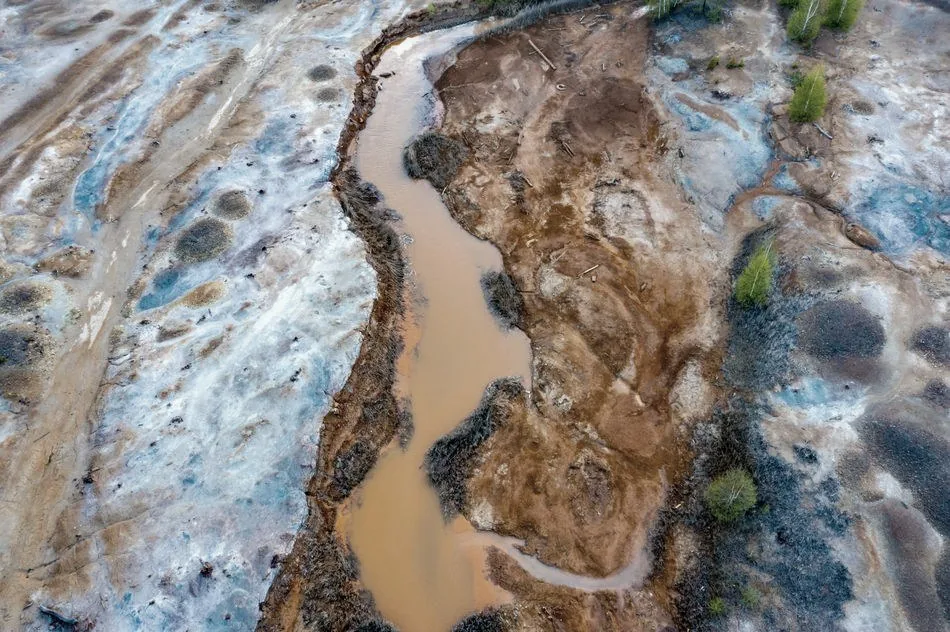

When the environment enters the balance sheet
How environmental risks can affect provisions, asset values, cash flows, credit, and insurance. Sustainability disclosure is not the same as accounting recognition, and confusing the two leads to flawed decisions.
“Entering the balance sheet” can mean different things. A remediation liability may meet the criteria for recognition as a provision; a regulatory change may require disclosure of a contingency; a water restriction may reduce production capacity and alter cash flow projections; and the degradation of an ecosystem service may affect credit, insurance, or strategy before generating any accounting entry. Confusing these situations produces two opposite errors: financial invisibility of a material risk, or premature recognition of an obligation that does not yet exist.
Not every environmental risk shows up as a provision. But every material risk should have an owner, a horizon and a decision.
CPC 25 (Brazilian accounting standard on provisions) requires, for a provision, a present obligation arising from a past event, a probable outflow of resources, and a reliable estimate. CPC 01 (Brazilian standard on impairment of assets), in turn, can make an environmental effect relevant to the recoverability of assets, while CPC 27 (Brazilian standard on property, plant and equipment) governs dismantling, removal and restoration costs associated with certain obligations. In parallel, IFRS S1 directs the disclosure of sustainability risks capable of affecting cash flows, access to financing or cost of capital.
In Brazil, CVM (Brazil's securities regulator) Resolution No. 244 of May 2026 removed the general requirement for sustainability reporting by publicly held companies and established a voluntary “comply or explain” regime. Internationally, the ISSB intends to put out for consultation, in October 2026, a proposal for specific guidance on nature based on the TNFD, not yet issued as of the date of this article. The practical challenge is not to assign a single price to nature, but to build a line of evidence between environmental condition, business exposure, financial effect and appropriate treatment.
The most important boundary lies between recognizing, disclosing and managing. These responses can coexist, but they are not interchangeable: accounting applies recognition and measurement criteria; sustainability reporting informs capital providers of relevant risks and opportunities; and business management decides how to reduce exposure or reshape the portfolio. Quality lies in the connection among the three fronts, not in merging them.
The balance sheet is not just a metaphor
The phrase “the environment has entered the balance sheet” usually signals that environmental matters have come to influence economic decisions. In a technical sense, the balance sheet is only one of the financial statements: the environmental effect may appear as a provision, a reduction in the value of an asset, a component of the cost of fixed assets, in the cash flows or in the notes, or it may remain outside accounting recognition and still be material to investors, creditors and insurers.
Four channels help organize this translation. On the liabilities side are obligations to repair, decommission or restore. On the assets side, loss of capacity, obsolescence and indicators of impairment. In the cash flows, shutdowns, lower productivity and adaptive CAPEX. In financing, the effect can reach covenants, credit terms and cost of capital. The same environmental condition may travel through more than one channel, and at different times.
A contaminated site illustrates this multiplicity: the present obligation to remediate may generate a provision, if the other criteria are met; uncertainty about extent and cost may require disclosure; the temporary inability to use part of the property may affect cash projections. None of these effects should be presumed: each requires its own evidence and framing.
Recognizing, disclosing and managing are different decisions
The first filter is conceptual. Financial materiality is not synonymous with a provision: information is material for sustainability reporting when omitting it could influence the decisions of the users for whom the report is intended. Under IFRS S1, the focus is on risks that could reasonably be expected to affect cash flows or cost of capital. Accounting recognition answers a different question: is there an asset, liability, revenue or expense that meets the definition of the applicable standard? Disclosure in the notes also has its own logic: a contingent liability may not be recognized and still need to be described. Finally, there are risks that require neither recognition nor disclosure at that moment, but justify monitoring and controls.
- Recognize: record in the financial statements when the definitions, criteria and measurement bases of the applicable accounting standard are met.
- Disclose: explain relevant information in the notes or in a sustainability report, even when no value is recognized on the balance sheet.
- Monitor and manage: assign an owner, indicator, deadline, threshold and action to an exposure that does not yet require recognition or disclosure, but may evolve or affect decisions.
The classification must be reviewed at each reporting close and whenever new facts change the probability, extent or cash assumptions. A risk may begin as an operational hypothesis, evolve into a disclosed contingency and, after an administrative decision or a physical event, come to meet the criteria for a provision; the reverse can also occur, if relevant uncertainties are resolved.
When an environmental obligation becomes a provision
CPC 25, converged with IAS 37, defines a provision as a liability of uncertain timing or amount. Its recognition simultaneously requires three elements: a present obligation arising from a past event; a probable outflow of resources capable of generating economic benefits; and a reliable estimate of the amount. If one of these conditions is not met, a provision is not recognized based solely on environmental relevance or the expectation of expenditure.
- Present obligation: there must be a fact that has already occurred that leaves the entity with no realistic alternative to settlement. A law, license, decision, contract or damage caused may be relevant, depending on the facts.
- Probable outflow: management assesses the probability that resources will be required to settle the obligation; when it is not probable, the treatment may shift to a contingent liability.
- Reliable estimate: uncertainty does not automatically preclude recognition. Ranges of outcomes and schedules can support the best estimate, provided the assumptions are defensible.
A public decarbonization, restoration or water-use target does not, on its own, create a provision. In a discussion concluded in 2024, the IFRS Interpretations Committee reinforced that a policy or statement only produces a constructive obligation according to its content and the valid expectations it creates; even so, the present obligation depends on the occurrence of the event to which the commitment applies.
In the environmental field, measurement is often more difficult than identifying the obligation. A remediation estimate can vary with the extent of the plume, technology, timeline and closure criteria; the most responsible technical response is usually a range or set of scenarios with assumptions and revision triggers. Accounting transforms this input into the best estimate required by the standard; it is not for the environmental study to decide the accounting value on its own.
The environment also affects the assets side
Limiting environmental analysis to liabilities produces an incomplete picture. CPC 01 requires the entity to assess, at the end of each period, whether there is any indication that an asset may be impaired. Funding constraints, recurring floods, embargoes and deteriorating operating conditions may, depending on the facts, act as indicators or change the projections of the recoverability test; the effect is not automatic, and the environmental evidence must be connected to value in use and to the relevant financial assumptions.
CPC 27 shows that the issue does not arise only when an accident occurs: the cost of an item of property, plant and equipment may include the initial estimate of dismantling and restoring the site when the entity incurs that obligation by using the asset, as in mines, industrial facilities and assets with closure obligations.
There are also economic effects that do not immediately correspond to an accounting adjustment: an asset may remain recognized at the appropriate carrying amount and still lose strategic flexibility or require high CAPEX to maintain competitiveness. For this reason, “asset value” must be specified: carrying value, economic value, transaction value and value in use are not equivalent.
An environmental condition only becomes useful financial information when connected to the specific exposure of the business and to the mechanism by which it can affect performance, value or financing.
From nature to financial risk: the path is not direct
The international literature on nature-related risks distinguishes physical risks, arising from the degradation of ecosystems and the loss of services on which the activity depends, and transition risks, arising from regulatory, technological and market changes. Litigation and liability can cut across both categories.
The NGFS observes that these factors reach traditional financial categories: a loss of available water can raise costs and reduce revenue; the erosion of natural flood protection can increase physical damage and insurance premiums. Large international audit and consulting firms stress that mapping dependencies is not enough: probability, magnitude and impact mechanism must be considered for the diagnosis to influence credit pricing and market risk.
This translation is necessarily location-specific. A water-intensive plant located in a basin with low availability presents a different exposure than an equivalent facility in another territory; the same applies to supply chains, where the supplier, origin and adaptive capacity determine the effective risk.
It is also important not to confuse “natural capital” or “environmental assets” with accounting assets that are automatically recognizable. Ecosystems can be central to the business model without the entity meeting the criteria for recognizing an asset in the financial statements.
Water, soil and biodiversity do not have a single price
The attempt to convert every environmental topic into a common currency is tempting, but it can produce false comparability. The economic value of water depends on availability, water-use permits and the effect of interruption; the cost of a contaminated site depends on the conceptual model and the closure criteria; the relevance of biodiversity depends on location and productive dependencies.
Rather than starting from an aggregate price, the company can decompose the problem into observable financial drivers: days of downtime, yield loss, marginal cost of water, redundancy CAPEX, remediation cost or revenue dependent on priority territory. Some drivers allow direct estimation; others require scenarios and remain qualitative until the evidence improves.
Large international strategy consultancies have been treating natural capital as a portfolio topic, not merely one of compliance. The merit lies in linking actions on water, land use and biodiversity to operational continuity; the limit lies in not turning global estimates into company-specific figures without analysis of assets, supply chain and assumptions.
Brazil changed its regulatory course in 2026
Until May 2026, materials published under the original wording of CVM Resolution No. 193 indicated a future requirement for sustainability reporting by publicly held companies. That information has been superseded: CVM Resolution No. 244 of May 29, 2026, revoked the general requirement and reframed the regime as voluntary adoption, preserving a transparency mechanism.
Under the current rule, a company that opts for the report must declare explicit adherence to the standards of the CBPS (Brazilian Sustainability Reporting Committee) and the ISSB, and maintain publication for at least three consecutive fiscal years. As of January 1, 2027, a company that does not file a report must justify the choice in a communication to the market. The change does not remove the environmental topic from the financial statements nor from the disclosure duties set out in other standards; it specifically alters the reporting regime of Resolution No. 193.
In the financial system, the Central Bank has already incorporated social, environmental and climate risks into the prudential agenda through the GRSAC (social, environmental and climate risk management) framework, showing that the environmental effect on credit and financial stability does not depend on a future standard specific to nature.
International convergence has begun, but is still under construction
IFRS S1 already requires, for the entities that apply it, material information on all sustainability risks capable of affecting their prospects, not just climate. In May 2026, the ISSB announced its intention to propose a specific IFRS Practice Statement for nature-related disclosures, built on the TNFD; the exposure draft is expected in October 2026 and therefore remains a future proposal, not a final standard in force. Meanwhile, the TNFD offers a voluntary framework organized around governance, strategy, risk management, metrics and targets, and the LEAP method helps avoid generic assessments disconnected from the territory.
Voluntary adoption has gained scale: ahead of COP30, the TNFD reported 733 organizations in 56 countries committed to aligned disclosures, including financial institutions with US$ 22.4 trillion under management. These figures indicate market mobilization, not certification that all of them already fully publish the 14 recommendations; the initiative itself acknowledges progressive adoption.
Regulators and large international audit firms have been developing tools for supervision, credit and maturity assessment, which points to greater integration between environmental information and capital decisions, but reveals recurring limitations: geospatial data gaps, methodological fragmentation and the risk of extrapolating dependency indicators into financial losses without testing the transmission mechanism.
A method for turning environmental evidence into financial decisions
A company does not need to wait for all metrics to be consolidated. It can begin with a progressive, decision-oriented process:
- Define the decision: clarify whether the work will support accounting close, budgeting, investment, acquisition, financing or disclosure, since each decision requires a different horizon and level of confidence.
- Locate the exposure and characterize dependencies, impacts and obligations: map assets, operations, suppliers and communities, distinguishing what the business alters from the obligations that may result from the facts.
- Identify the financial channel: explain how the event may reach revenue, cost, CAPEX, provision or credit; without that bridge, the environmental indicator does not inform financial materiality.
- Build scenarios and quantify without erasing the uncertainty: combine probability, magnitude and adaptive capacity, using ranges instead of a single figure when the regulatory response is still unknown.
- Apply the correct treatment: together with accounting, legal and finance, decide whether the fact requires recognition, a note or a management plan.
- Integrate into governance: assign an owner, budget, indicator and review date. A mapped risk without a decision-making process remains outside management.
The risk of false precision
Models can generate figures with many decimal places and little decision-making reliability. In environmental risk, the main source of error is rarely purely mathematical: it lies in an incomplete conceptual model, in spatial extrapolation or in the assumption that every dependency will convert into a loss. The NGFS stresses the need for more granular data and explicit treatment of uncertainty. There is also the risk of double counting: a water constraint may reduce revenue, raise cost and lead to adaptation CAPEX, and adding up all the effects without checking interdependencies can overestimate the loss.
The best estimate is not necessarily the most detailed one, but the one that uses information sufficient for the decision, states its limitations and defines which new data could materially change the conclusion.
What boards, CFOs and project owners should ask
Governance matures when environmental questions come to be framed in the language of decisions without losing their technical content. A minimum set includes:
- Where is the exposure? Which assets, basins, suppliers and communities concentrate relevant dependencies or obligations?
- What is the evidence? Does the diagnosis rest on measurements and official sources, or only on sector indicators?
- Through which channel can value change? Revenue, cost, CAPEX, provision, credit or strategic option?
- What is the horizon? Is the risk current, cumulative, acute or chronic, and has it been reconciled with the useful life of the assets?
- What treatment was applied, and why? Is the decision grounded in the standard and documented with owners from the technical, accounting and legal areas?
- What could change the conclusion? Which data or authority decisions function as revision triggers?
These questions also reveal opportunities: reduced consumption, water redundancy and the design of more resilient assets can protect cash and strategic optionality, provided they are subjected to the same rigor of baseline, timeline and expected benefit.
Conclusion
The environment enters the financial statements when relevant facts cross specific accounting criteria; it enters sustainability reporting when material risks may affect the decisions of capital providers; and it enters management before that, when the organization recognizes that water, soil and biodiversity shape operations and continuity. Maturity does not lie in turning every environmental impact into a provision, nor in indiscriminately monetizing nature, but in building an auditable line of evidence: locate the exposure, explain the financial channel and apply the correct treatment.
When the technical, legal, financial and accounting areas work on the same factual basis, environmental risk ceases to be a side note and comes to inform budgeting, provisions, financing and strategy, without promising a precision that the data do not yet support.
Technical, accounting and legal note
This article is technical and informational in nature and does not constitute an accounting or legal opinion, audit, independent valuation or investment recommendation. Recognition, measurement and disclosure depend on the facts, on materiality and on the standards applicable to the entity. Environmental work provides technical evidence and estimates; it does not replace the judgment of the responsible accountant, the independent auditor or legal counsel. The concepts of “natural capital” and “environmental assets” used in the TNFD do not, in themselves, imply the recognition of an accounting asset.
Sources consulted: CPC 25 (Provisions, Contingent Liabilities and Contingent Assets); CPC 01 (R1) (Impairment of Assets); CPC 27 (Property, Plant and Equipment); IFRS Foundation (IAS 37 and IFRS S1); IFRS Interpretations Committee (climate commitments, IFRIC Update March 2024); CVM (Resolution No. 244/2026 and institutional communication on the revocation of Resolution No. 193); Banco Central do Brasil (Report on Social, Environmental and Climate Risks and Opportunities, and Resolution BCB No. 139/2021, GRSAC framework) (link pending validation); TNFD (Recommendations, LEAP method and voluntary adoption data); IFRS Foundation (proposed Practice Statement on nature, ISSB); NGFS (nature data package, note on supervision and note on modeling limitations); OECD (supervisory framework for nature-related financial risks); international technical publications on the integration of environmental risk and financial decision-making. The text of this article is an original synthesis by LZ Ambiental.
LZ Ambiental supports organizations in building the technical foundation needed to understand how environmental conditions can affect assets, operations and capital decisions: through territorial assessments, water, soil and biodiversity studies, investigation of liabilities, scenario analysis and transparent documentation of assumptions and uncertainties.